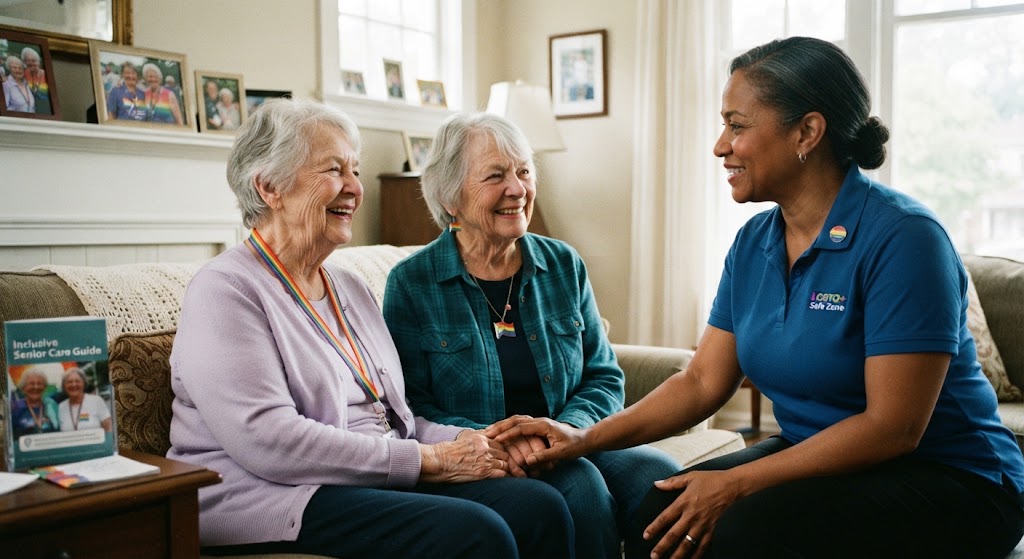
A gay couple married for forty years should never have to hide a wedding photo from a caregiver walking through their front door. Yet that fear shapes real decisions for older adults every day. Love does not retire when hair turns gray, and neither does the need to be seen fully.
Good LGBTQ+ senior home care treats identity as part of a person’s health story, not a detail to tiptoe around. Families want a caregiver who greets a loved one’s partner by name and treats their history with respect. That kind of care exists, and it starts with knowing what to look for.
Why Older LGBTQ+ Adults Need Real Home Care
Decades of open bias left a lasting mark on many older LGBTQ+ people. Some hid relationships for entire careers out of fear of losing a job. That history follows people into old age and shapes how they approach a new caregiver. Quality LGBTQ+ elderly care means understanding this weight, not just checking a box on a brochure.
This weight shows up in small, ordinary moments that a caregiver might otherwise miss. A senior might avoid mentioning a partner during a health update, or hesitate before correcting a caregiver who uses the wrong name. Home care built on real understanding trains staff to notice these cues and respond with patience, not confusion, slowly rebuilding the trust that decades of discrimination wore down.
What Compassionate Elderly Care Looks Like in Practice
A few concrete signals separate genuine inclusion from a rainbow sticker on the door.
- Staff Trained in LGBTQ+ Needs
Ask if caregivers complete real training on LGBTQ+ history and health needs. Programs such as SAGECare exist for this purpose. Staff who understand pronoun use, chosen names, and health concerns linked to HIV status or hormone therapy respond calmly, without fumbling through a visit.
- Inclusive Paperwork and Language
Intake forms tell a quiet story before a caregiver knocks on the door. Paperwork with space for a chosen name, a partner, or a gender identity outside the binary signals genuine forethought. Forms built only for a husband and wife can push a senior back into hiding.
- Respect for Chosen Family
Many LGBTQ+ elders built support networks outside blood relatives after facing rejection from their own families. A caregiver should treat a close friend or longtime partner with the same weight given to a spouse or adult child. Leaving a chosen family out of decisions causes harm.
LGBTQ+ Senior Care by the Numbers
These figures show why compassionate care built on trust matters so much for this community.
| Statistic | Source |
| 85% of older LGBTQ+ adults worry about facing discrimination | AARP |
| 89% of survey respondents believed LGBTQ+ people could not come out safely in a nursing home | National Senior Citizens Law Center |
| Around 7 million LGBTQ+ adults in the U.S. will be 50+ by 2030 | SAGE |
| 34% of LGBTQ+ older people in New York fear having to re-closet themselves when seeking elder housing | SAGE |
| 88% say staff training would make them more comfortable with care | SAGE |
Steps for Finding LGBTQ+ Friendly Home Care Services
A short list of actions turns a stressful search into a manageable one.
- Call an agency directly and ask about LGBTQ+ training and written non-discrimination policies.
- Check the Human Rights Campaign and SAGE Long-Term Care Equality Index for participating senior care communities.
- Talk to local LGBTQ+ community centers and advocacy groups for trusted recommendations.
- Read reviews left by other LGBTQ+ families to spot patterns in real experiences.
- Confirm in writing how the agency defines and includes chosen family in care decisions.
- Ask if you can meet the caregiver before regular services begin.
Asking the right questions early can help families better understand their care options. Allied Home Health provides personalized home health care in Houston, focusing on understanding each client’s needs, respecting their dignity, and supporting their independence. Get in touch today to learn more about care options for your loved one!
What Sets Trusted Home Care Providers Apart
Trust builds slowly through consistency, not catchy slogans. A provider earns it by sending familiar faces, communicating openly about changes, and running thorough background checks on every hire. Trust also grows through small daily choices: using correct names and never questioning a relationship out loud.
That consistency matters even more once a senior’s health needs change. A family wants to know that a new caregiver stepping in for a sick day already understands the household’s history, not just the medical chart. Providers who document these details carefully and pass them along between staff spare a senior from repeating their life story to someone new.
Frequently Asked Questions
- How Can A Family Tell If An Agency Truly Supports LGBTQ+ Seniors?
Look past marketing materials and ask about staff training records, written non-discrimination policies, and experience with LGBTQ+ clients.
- What Questions Should I Ask When Finding LGBTQ+ Friendly Home Care Services?
Ask how staff are trained, if paperwork includes space for chosen names and partners, and how the agency handles a caregiver who refuses to serve an LGBTQ+ client.
- Does LGBTQ+ Elderly Care Cost More Than Standard Home Care?
No. Inclusive care should cost the same as any other home health service. Pricing depends on hours, medical needs, and caregiver qualifications, never on identity.
- Are Trusted Home Care Providers Required To Have LGBTQ+ Training?
LGBTQ+ training requirements vary by provider and setting. SAGECare offers voluntary cultural-competency training.
- Can A Chosen Family Member Be Involved In Care Decisions?
Yes, most agencies allow a designated support person regardless of legal relationship status, as long as the client grants permission in writing.
Conclusion
Every senior deserves care that sees them completely, without conditions attached to who they love or how they identify. Families who ask direct questions, check credentials, and watch how staff treat their loved one early on set the stage for a lasting relationship. Strong LGBTQ+ senior care does not happen by accident. It happens because families keep standards high and providers keep earning trust.
Standards matter more than promises when a family is choosing who cares for a loved one. Allied Home Health provides certified nursing assistants in Houston, TX, to meet that high bar. Reach out today to see what consistent, dependable care actually feels like!
About Allied Home Health. Allied Home Health is a licensed private duty nursing agency serving Houston and the surrounding Harris County area from 2421 W. Holcombe Blvd, Houston, TX 77030. Call 713-524-4422 to talk through your family's situation.